

Setting goals is easy. Following through is where most people struggle.
If you’ve ever felt motivated at the start of a new year, written down your goals, and then slowly watched them slip away, you are not alone. Most people don’t fail because they lack discipline or desire. They fail because they were never shown how to build goals that work with real life.
This guide is designed for busy individuals who want meaningful change without unrealistic pressure. It will walk you step by step through how to create clear goals, how to achieve them using proven psychological strategies, and how to maintain consistency; even when you miss a day or life gets in the way.
This approach balances discipline and self‑compassion, because lasting change requires both.
Table of Contents
- Areas of Life Where Goals Matter Most
- Step 1: Choose the Right Type of Goal
- Step 2: Create SMART Goals That Fit Your Life
- Step 3: Use Micro Habits to Build Momentum
- Step 4: Plan Goals in 12‑Week Cycles
- Step 5: Stay Consistent With Discipline and Compassion
- Step 6: How to Recover When You Miss a Day or Feel Burned Out
- Final Encouragement
- Step 7: BONUS Create a Vision Board That Reinforces Your Goals
Areas of Life Where Goals Matter Most
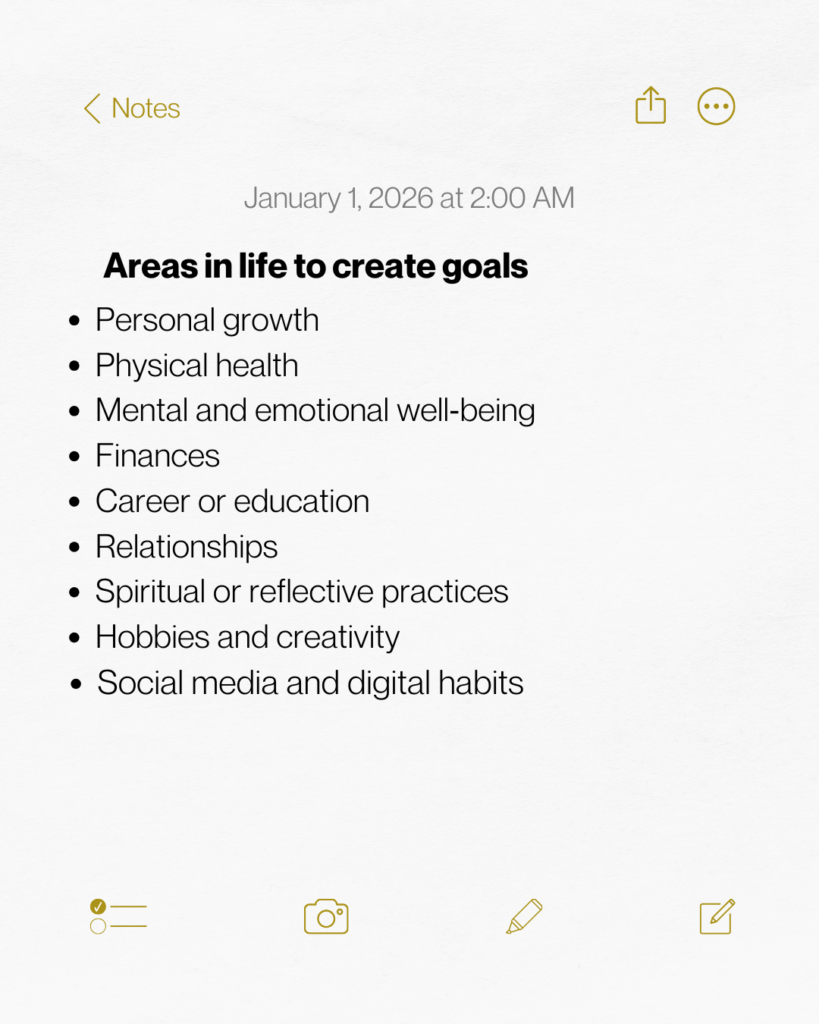
Before setting goals, it helps to identify where you want change. Goals are most effective when they are connected to meaningful areas of life rather than vague self‑improvement.
Common areas where people create goals include:
- Personal growth: learning new skills, reading, mindset work, confidence
- Physical health: movement, nutrition, sleep, energy
- Mental and emotional well‑being: stress management, boundaries, therapy, self‑care
- Finances: budgeting, saving, debt reduction, long‑term planning
- Career or education: skill development, certifications, career growth
- Relationships: communication, quality time, connection
- Spiritual or reflective practices: prayer, meditation, journaling, values alignment
- Hobbies and creativity: interests that bring joy and fulfillment
You do not need goals in every category at once. Choose the area that feels most important right now.
Step 1: Choose the Right Type of Goal
Instead of setting many goals at once, start with one primary goal.
This works because focus reduces overwhelm and increases follow‑through. Psychology consistently shows that clarity and simplicity improve consistency.
Ask yourself:
- If this goal improved, would my life feel meaningfully better?
- Is this goal something I am willing to work on consistently, not perfectly?
Discipline starts with choosing wisely.
Step 2: Create SMART Goals That Fit Your Life
SMART goals provide structure, direction, and accountability. When each part of the SMART framework is applied intentionally, goals become easier to follow through on especially during busy or low-energy seasons.
SMART stands for:
Specific
Your goal should be clear and focused, not vague.
Ask yourself:
- What exactly do I want to work on?
- What does this look like in real life?
❌ Vague: “I want to be healthier.”
✅ Specific: “I want to improve my energy by moving my body consistently.”
Measurable
A measurable goal allows you to track progress and know whether you are showing up.
Ask yourself:
- How will I know I’m making progress?
- What can I count, track, or observe?
Example:
- Number of workouts per week
- Minutes spent on an activity
- Days you showed up
Measurement creates clarity and accountability without relying on motivation.
Achievable
Your goal must be realistic for your current life season, not an ideal one.
Ask yourself:
- Is this possible with my current time, energy, and responsibilities?
- Would this feel challenging but doable?
An achievable goal stretches you without setting you up for burnout.
Relevant
A relevant goal connects to your values and priorities.
Ask yourself:
- Why does this matter to me right now?
- What area of my life will improve if I stay consistent?
Relevance is what sustains effort when motivation fades.
Time-Bound
A time-bound goal creates focus and urgency without pressure.
Ask yourself:
- What is a reasonable time frame?
- When will I review or adjust this goal?
Example of a full SMART goal:
“For the next 12 weeks, I will move my body at least two times per week to support my energy and mental health.”
SMART goals remove confusion and give discipline a clear direction.
Step 3: Use Micro Habits to Build Momentum
Large goals are achieved through small, repeatable actions.
Micro habits are intentionally small behaviors that lower resistance and make consistency possible, even on busy or low‑energy days.
Examples of micro habits:
- 5 minutes of movement
- Writing one sentence
- Reading two pages
- One mindful breath before reacting
Small actions may feel insignificant, but psychologically they build confidence and reinforce identity. Over time, this momentum compounds.
Step 4: Plan Goals in 12‑Week Cycles
Year‑long plans often fail because they are too distant and rigid.
Instead, plan goals in 12‑week (quarterly) cycles.
Ask yourself:
- What does realistic progress look like over the next three months?
- What responsibilities or limitations do I need to consider?
- What would “successful effort” look like, even if outcomes vary?
Shorter cycles allow for discipline and flexibility, both are essential for long‑term success.
Step 5: Stay Consistent With Discipline and Compassion
Consistency does not mean perfection.
Discipline means showing up repeatedly. Compassion means responding wisely when you don’t.
Before you start, decide:
- What counts as showing up?
- What is my minimum standard on hard days?
- How will I speak to myself if I miss a day?
Missing a day does not erase progress. Quitting does. The goal is to return quickly, without shame.
Step 6: How to Recover When You Miss a Day or Feel Burned Out
Burnout and interruptions are part of life, not signs of failure.
When this happens:
- Reduce the goal to its smallest version
- Focus on maintaining the habit, not advancing it
- Re‑commit for a short window
Sometimes maintaining consistency means scaling back, and that still counts as discipline.
Final Encouragement
If you’ve struggled to maintain goals in the past, it does not mean you lack willpower. It means you need a better system.
In this guide, you learned:
- Where to set meaningful goals
- How to create clear, SMART goals
- How to use small actions to build momentum
- How to stay consistent with both discipline and compassion
- How to restart without labeling yourself a failure
The new year is not always about reinventing yourself. Sometimes, it’s about continuing; with more clarity, structure, and self‑respect than before.
Start where you are. Show up consistently. Adjust when needed. That is how goals are created, achieved, and maintained.
You can stop here, but if you want that visual representation of the person you’re becoming, your next step is a vision board.
Vision Board: Turning Goals Into a Visual Identity

Once your goals are clearly defined, a vision board helps bring them to life.
A vision board is not about wishful thinking or chasing unrealistic outcomes. When used correctly, it becomes a psychological tool that reinforces identity, consistency, and focus. It reminds you who you are becoming, especially on days when motivation is low.
The most effective vision boards are created after goal-setting, not before. This ensures your visuals support real habits, realistic progress, and your current season of life.
Instead of asking, “What do I want?” a powerful vision board asks:
“Who am I becoming as I work toward my goals?”
Your vision board should reflect:
- The daily actions you’re committing to
- The energy and feelings you want to experience
- The identity you’re building through consistency
Place your vision board somewhere you’ll see it regularly; near your workspace, inside your planner, or as a digital background. It’s meant to guide your behavior, not pressure you.
Vision Board Companion Worksheet
(Use this alongside your goal-setting worksheet)
Step 1: Revisit Your Goal
Write the SMART goal you’re currently working toward:
Step 2: Define the Identity Behind the Goal
Complete the sentence:
“As I work toward this goal, I am becoming the kind of person who…”
Examples:
- follows through even when life gets busy
- chooses progress over perfection
- returns quickly after setbacks
Step 3: Identify the Feelings You Want to Experience
Circle or write 3–5 feelings you want your goals to support:
- Calm
- Focused
- Confident
- Energized
- Grounded
- Balanced
- Proud
- Capable
Other feelings:
Step 4: Choose Visuals That Reflect Real Life
For each category, choose one image that feels realistic and attainable.
Daily Habits / Process
What does showing up actually look like?
Lifestyle or Environment
What kind of life supports your consistency?
Emotional State
What visual represents how you want to feel?
Step 5: Add Identity-Based Words or Phrases
Choose 2–4 short phrases that reinforce discipline and compassion.
Examples:
- Progress over perfection
- I return quickly
- Consistency builds confidence
- This season counts
My phrases:
Step 6: Decide Where Your Vision Board Will Live
Check one:
- ⬜ Planner or journal
- ⬜ Wall or cork board
- ⬜ Phone or tablet background
- ⬜ Private Pinterest board
Step 7: Use Your Vision Board as a Reset Tool
When you miss a day or feel overwhelmed, commit to one small action instead of quitting.
My reset action:
Reminder to myself when I fall off track:
Final Reminder
Your vision board doesn’t create change, your actions do.
The board simply keeps your goals visible, your identity clear, and your focus grounded in reality.
Consistency grows when clarity and compassion work together.